Butter Garlic Cilantro Naan / Naan recipe Without Yeast


                 Naan is a most popular Indian bread and it is loved by everyone across the globe. Originally, nan was a general term for various flatbreads from different parts of the world. The name originates from (new) Persian, itself from Sanskrit nayan; being a generic word for bread. Naan can be made in different flavors like plain, garlic, cheese, cilantro, whatever you can think of. Once you know the making of basic naan, you can try out all the possibilities out there. In this recipe, I prepared naan without yeast and used stove top method. I really love the soft texture, taste and shape of the naan. Adapted this recipe from here. Naan goes well with any spicy curries like aloo gobi, aloo palak, navratan korma, paneer tikka masala or aloo mutter. I had it with dal makhani.


    Ingredients

         2 cups of All Purpose Flour / Maida

         1/2 cup of Yogurt / Curd
         1/2 cup of Warm Milk
         1 tsp of Sugar
         1/2 tsp of Salt
         3/4 tsp of Baking Powder
         1/2 Tsp of Baking Soda
         3 Tbsp of Chopped Garlic
         3 Tbsp of Chopped Cilantro
         1 Tbsp of Canola / Vegetable Oil


    Yield : 9 Naans

    Method

  • Sieve the flour, baking powder, baking soda and salt. Place the sieved flour on a wide bowl. Make a well in the center of the flour and pour sugar, milk, oil and yogurt, combine everything to form a soft dough. Cover the bowl with a damp cloth and let it rest for 6 hrs or you can also leave it for overnight.
  • After the resting time, knead the dough gently for 5 mins.  Dust the counter top (working surface) with some, all purpose flour(maida), take a large lemon sized dough and roll into a thick roti, slightly elongated in shape or tear shape.  Wet your fingers with water and run your fingers along one side of the roti.
  •  Heat a cast iron tawa (pan), once it’s hot, place the naan, wet side down , sprinkle some cilantro and chopped garlic on the top, press it with your finger / spoon.  Immediately place a lid and cook it for 1 min on a high flame. Remove the lid and you can find that the naan bubbles up on the surface of naan. If it has turned brown , just flip it. Now cook the other side of the naan on the same tawa by closing the lid,  otherwise place it over direct heat of the burner, (bubble side facing the fire) and using tongs,  spreading the naan all over the heat so that brown spots appears. “Do this for a few secs and not too close to the flame”.
  •  Remove the naan from the heat, drizzle some butter over the naan and serve hot with any curry of your choice like aloo gobi, aloo palak, navratan korma, paneer tikka masala or aloo mutter . I had it with dal makhani. I will be posting the recipe soon .


     Tips

  • You can cook naan either on stove top method or in oven at 400 degree F for 2 mins on one side and another 2 mins on other side or in broil method.
  • You may also use yeast instead of baking soda and powder.
  • If you are planning to make naan for any special occasion, start making dough, one day before you make naan. 
  • If you have remaining naan dough, refrigerate it for 1-2 days.


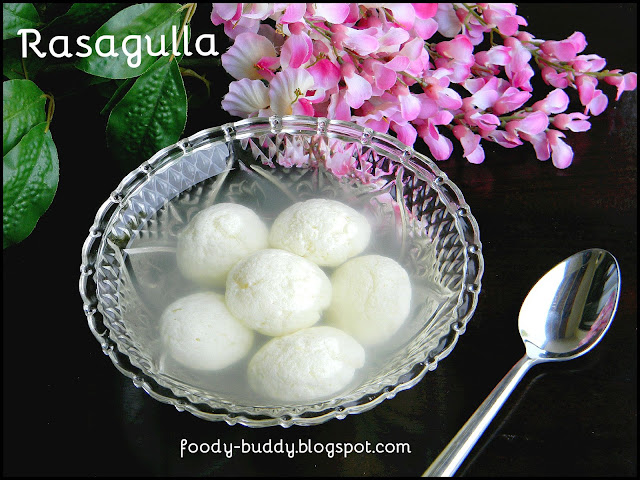
Rasagulla Recipe / Rasgulla Making / Bengali Sweet


       Rasagulla Recipe is a freshly made homemade cheese balls simmered in a pot of sugar syrup,it is a famous bengali sweet usually I make it for diwali.. “Ras is the syrup and gulla is a ball”.  I’m a big fan of Milk sweets especially I love Rasgulla and basundi because of its rich, creamy and delicious in taste.You can make this rasgulla for diwali or any festival occasion. I made this sweet for our wedding anniversary last week.  For this sweet, I used 2 % milk, you can also use full cream milk and I made this recipe using pressure cooker. Got this recipe from here. This is very easy to make rasagulla and also yummy in taste and also it can be done so quickly. Try this delicious sweet and let me know your feedback.


    Make : 7 Rasgullas
    Ingredients

       2 Cups of  Milk (2%)
       2 Tbsp of Lemon Juice
       3/4 – 1 Cup of Sugar
       2 and 1/4 Cup of Water
       Pinch of Cardamom Powder


    Method

    To Make a Paneer/ Indian Cottage Cheese

  • Boil the milk in a heavy bottomed vessel over medium heat, when milk starts boiling, just simmer it, then add the lemon juice to the boiling milk, stir the milk gently. Now milk will starts curdling and then whey will separate. Switch off the flame.
  • Strain the curdled milk in a cheese cloth/muslin cloth placed in a strainer. Keep the bowl under strainer to collect the whey. Donot waste the whey, they are nutritious and has protein in it.
  • Wash the milk solids in a cold running tap water, this has to be done to remove the lemon smell. Squeeze the excess water and hang it for 15-20 mins. After that, take out the milk solids/ paneer from muslin cloth, knead it well with hand for 10 mins until you get a soft and smooth dough and make them into a small round size balls. I made 7 balls.


     To Make Rasgulla

  • In a pressure cooker, add sugar, pinch of cardamom powder and water, bring it to a boil, add the panner balls and close the pressure cooker. After you get 1 whistle, simmer it for 7 mins. Turn off the flame.
  • After you open, you can notice, the rasgulla will be doubled in size. Keep this rasgullas in refrigerator for 1 hr and serve it chilled.


    Tips

  • Use homemade rasgullas to make rasmalai dessert.
  • You can use the whey to make soft chapathi or in bread making. Don’t waste it.
  • You can also cook rasgulla in a heavy bottomed pan instead of using pressure cooker.
  • Use rose water to the sugar syrup to get a nice flavor to rasgullas.
  • Add pistachios and saffron strands for a color and to get a great taste.

      
    Health Benefits of Panner / Indian Cottage Cheese

  • Paneer is a good source of vit D and calcium, which helps to build strong bones and teeth.
  • Panner in moderation, is associated with lower body weight, reduced risk of insulin resistance syndrome.
  • Paneer is high in protein and reduces cancer risk
  • Helps in lower, back and joint pain.
  • Paneer prevents osteoporosis in women.
  • Good for digestive which helps in activating the hydrolysis of protein
  • Whey acts as a cleansing agent, helps in function of urinary system.  


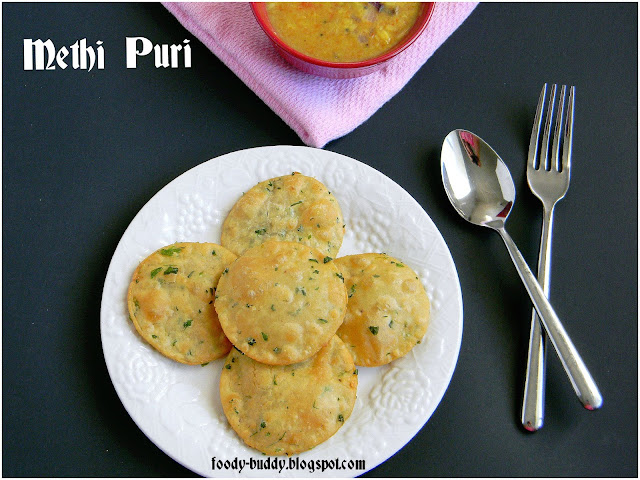
Mini Methi Poori / Methi Puri Recipe – Indian Breakfast Dish


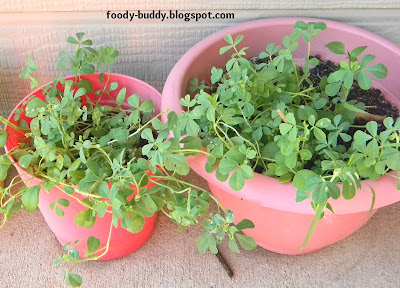
            Puri / Poori is a deep fried puffed bread, generally made with wheat or maida, salt and water. Additionally, in this recipe, I used  fresh fenugreek leaves (methi) from my garden. Here the dough is then kneaded, rolled out into a circle and then deep fried in a hot oil. It tastes great if eaten hot, puffed up with a crispy outside and a moist inside. Though it starts to lose its puffiness and becomes chewy, when cold, poori is still tasty when eaten that way . It is often served for weekend breakfast. Good accompaniment for poori is potato based curries, dal and channa masala. 


     Ingredients

           1/2 Cup of Whole Wheat Flour
           1/2 Cup of Maida / All Purpose Flour
           1/2 Cup of Methi/ Fresh Fenugreek Leaves, chopped
           1/4 Tsp of Ajwain / Omam
           1/4 Cup of Milk
           2 Tbsp of Oil
           2 -3 Tbsp of Water
           Salt to taste
           3 Cups of Vegetable Oil for Deep Frying


     Method


  • In a medium size bowl, combine the whole wheat flour, maida, ajwain, chopped methi leaves and salt. Add oil and milk, mix by hand until all ingredients are well combined. Gradually add water, to form a dough that holds together.
  • Knead the dough in the bowl until the dough is smooth about 5 mins. The dough should be moderately stiff. 
  • Cover the bowl with a kitchen towel and set aside for 15 mins. In a clean counter top, roll the dough into a rope and divide it into 12 – 14 equal portions. 
  • Roll each portion into a ball. Flatten the balls with a rolling pin and roll into a circles ( Small or big) about 1/4 inch thickness.
  • Heat the oil in a heavy bottomed pan over medium heat until it reaches 350 degree F.
  • Test for readiness by placing a small piece of dough into the hot oil. If the bubbles rises to the surface immediately, it is ready. Place the circles into the hot oil, one piece at a time. The dough will sink to the bottom, but immediately rises up.
  • Use light pressure with the back of slotted spoon to submerge the dough until it puffs up. Then, turn it over to brown on second side. 
  • Once it is done, remove the poori with a slotted spoon and drain on paper towel. Repeat the same procedure with the remaining dough. Serve immediately or keep it warm until ready to serve.


    Tips

  • If you find your dough is sticky, add a tbsp of flour and knead it again.
  • Always cook poori in a medium heat.
  • If the oil is too hot, the poori will brown too fast, may remain doughy and uncooked inside.
  • You can add grated ginger, red chilly powder for a different twist to the taste.


    Health Benefits of Methi or Fenugreek Leaves

  • Lowering Diabetes I and II
  • High in dietary fiber and Vitamin C
  • Lowers serum cholesterol.
  • Improves digestion.
  • Fenugreek leaves are rich in vitamins, minerals and good source of protein and Iron.